


Primary keyword: Super Bowl ROI report
Secondary keywords: Super Bowl ad ROI, Super Bowl marketing ROI, earned media value, fan sentiment, CMO marketing measurement, multi-channel amplification
Meta description (155–160 characters): Learn how to read a Super Bowl ROI report in 2026, measure true impact beyond the $8M spot, and turn fan sentiment into sales with better attribution.
Why the Super Bowl ROI Report matters more in 2026 than ever
A Super Bowl ad is still the biggest stage in advertising, but the ROI story is getting harder to read. The 30-second spot is only the entry fee, and the real gains (or losses) now happen across streaming, social, search, creators, and retail.
In 2026, CMOs are dealing with three realities at once:
- Costs are massive and “all-in” budgets are the real number
- Audience attention is fragmented across platforms
- Fan sentiment moves fast, and it’s measurable in near real time
A modern Super Bowl ROI report is not just a recap deck for the board. It’s a decision system that tells you what to double down on in the 72 hours after kickoff, and what to fix before the next media cycle passes you by.
The true cost of a Super Bowl campaign, and why the $8M spot is misleading
In 2026, a 30-second Super Bowl spot is roughly $8 million. That number grabs headlines, but it’s not what your finance team will judge.
A more realistic “all-in” Super Bowl investment often includes:
- Media (30 seconds): ~$8M
- Production: ~$2–5M
- Pre-game + post-game extensions: ~$4–6M
- Digital + social amplification: ~$3–8M
- Talent and celebrity: ~$1–10M+
Total estimated campaign cost: $18–37 million per brand
Your ROI report has to reflect this number, otherwise you’ll “win” the commercial and still lose the business case.

Alt text: CMO reviewing a Super Bowl ROI report dashboard showing total campaign cost breakdown across TV, streaming, social, and retail.
What “ROI” should mean in a Super Bowl ROI report (CMO definition, not vanity metrics)
A strong Super Bowl ROI report separates outcomes into three buckets, and it assigns real value to each.
1) Business outcomes (the stuff the CFO cares about)
Track these with the tightest attribution you can:
- Incremental sales revenue (short-term and 30–60 day lag)
- New customer acquisition and CAC
- Conversion rate lift (site, app, retail, partners)
- Subscription starts, upgrades, or leads (depending on category)
2) Brand outcomes (the stuff your next quarter depends on)
These don’t always convert instantly, but they compound:
- Top-of-mind awareness lift
- Aided and unaided recall
- Consideration and preference lift
- Branded search lift over baseline
3) Cultural outcomes (the multiplier effect)
This is where Super Bowl still shines, especially in a fragmented media world:
- Earned media value (EMV)
- Share of voice vs. competitors
- Creator and community pickup
- Memes, remixes, duets, reaction videos
Industry research in recent years shows average returns around $5.20 per dollar invested, but performance varies wildly. The point of your report is to explain why you landed where you did, and what actions increase odds next time.
The new scoreboard: reach is everywhere, and sentiment moves the market
Super Bowl viewership still aggregates a huge live audience (roughly 125 million viewers with peaks higher than that), but attention is not confined to broadcast.
What’s changed:
- Streaming has become a major viewing mode (and keeps climbing).
- Instagram and TikTok often drive the majority of brand engagement, not the TV broadcast itself.
- Social conversation peaks in tight windows, and brands either capitalize or miss it.
That’s why your ROI report needs a fan sentiment layer. Not just “mentions” or “likes,” but how people felt and what they did next.
A practical fan sentiment section should include:
- Net sentiment (positive minus negative) by hour
- Emotion clustering (funny, inspiring, cringe, confusing, polarizing)
- Comment themes and repeated language (what people literally say)
- Share drivers (what made people repost, stitch, or tag friends)
Super Bowl Blitz Newsletter (Batch 1/2): the 72-hour window that separates winners from “nice ad”
Most brands treat the Super Bowl like a one-night event. Smart brands treat it like a 72-hour performance window.
For CMOs, the best operating cadence is a daily “blitz” recap that answers:
- What is spiking right now?
- What creative cutdowns are winning?
- Which audience segments are responding?
- What’s the next best spend for amplification?
Include this video in your internal war room workflow:
https://www.youtube.com/watch?v=l6J-0zileKE
Think of “Super Bowl Blitz” reporting as Batch 1/2 of your measurement system:
- Batch 1 (0–72 hours): real-time insights, sentiment shifts, creative pivots, paid amplification decisions
- Batch 2 (day 4–day 30+): true incremental outcomes, brand lift stabilization, cohort retention, and LTV confirmation
If you only report once, you usually report too late to win the post-game attention.
The KPI framework CMOs should use (so your ROI report doesn’t turn into a highlight reel)
Here’s a clean KPI structure that works across categories.
A) Exposure and attention (inputs, not outcomes)
- Reach (TV + streaming + social)
- Video completion rate (esp. 6s, 15s, 30s)
- Frequency by audience segment
- On-platform watch time (where available)
B) Engagement and intent (leading indicators)
- Engagement rate and share rate
- Follower growth and profile visits
- Branded search lift (hourly and daily)
- Site sessions, app installs, store locator clicks
- Promo code usage or QR scans (if used)
C) Conversion and revenue (lagging indicators)
- Incremental revenue vs baseline forecast
- New customer share
- Conversion rate lift
- Retail velocity (where applicable)
- Pipeline influenced (for B2B)
D) Efficiency (the ROI math)
- Cost per incremental visit
- Cost per incremental conversion
- Cost per incremental dollar revenue
- Payback period (days/weeks)
A quick reality check your ROI report should always include:
“What happened if we remove the broadcast spot and look only at amplification?”
If amplification outperformed, that’s not a problem, it’s a strategy signal.
Multi-channel amplification: the ROI lever most brands still underuse
Research consistently points to the same truth: brands that extend the campaign across multiple channels see 3–5x better ROI than brands that rely on the broadcast moment alone.
Your Super Bowl ROI report should include a section titled:
“What did we do before and after kickoff?”
Because the best-performing campaigns usually:
- Release teasers early to build search demand
- Use creators to seed native formats (not just repost the TV ad)
- Retarget engaged viewers with performance creative
- Activate email and SMS in the post-game window
- Refresh landing pages to match the story and offer
- Run category conquesting during competitors’ buzz moments

Alt text: Marketing team in a war room monitoring Super Bowl ad ROI across TikTok, Instagram, YouTube, search, and ecommerce dashboards.
Why “likeability” is not the same as ROI (and how to report creative performance correctly)
A lot of Super Bowl coverage obsesses over “best ads” rankings. The issue is simple: likeability does not guarantee financial effectiveness.
Your report should separate:
- Creative resonance (did people enjoy it?)
- Message clarity (did they understand the brand and offer?)
- Behavior change (did they search, click, buy, subscribe?)
A practical creative performance table can include:
- Brand linkage score (survey or modeled)
- Message takeaway accuracy (qual + quant)
- Sentiment and comment themes
- Branded search lift per creative asset
- Conversion rate per landing page variant
If your ad “won the night” but drove low brand linkage, your report should say so plainly. That’s how you protect next year’s budget.
Earned media value (EMV) and social impact, how to keep it honest
Super Bowl social conversation can generate enormous earned reach, including hundreds of millions of dollars in estimated earned media value across brands.
But CMOs should be careful: EMV is helpful for directional comparisons, not a replacement for revenue.
To keep EMV honest in your ROI report:
- Show EMV next to share of voice
- Break out organic vs. paid social impact
- Show engagement quality, not just volume (shares, saves, comments)
- Tie spikes to specific moments and creative assets
- Use sentiment weighting (positive EMV vs negative attention)
If a brand goes viral for the wrong reason, the chart should not pretend it’s a win.
Fan sentiment to sales: turning “the internet liked it” into measurable growth
Here’s the missing link in many Super Bowl ROI reports: sentiment-driven optimization.
A simple playbook:
- Identify the winning emotion (funny, inspiring, nostalgic, underdog, etc.)
- Cut new versions emphasizing that emotion within 12–24 hours
- Shift paid spend to the formats where sentiment is best (Reels, TikTok, Shorts, X video)
- Retarget engagers with a clear offer or next step
- Update landing pages to match the language fans are using
When people are literally telling you what they like in comments, your ROI report should convert that into actions, not just screenshots.
FAQ: Super Bowl ROI report questions CMOs ask (and the answers you can use in the board room)
What is a Super Bowl ROI report?
A Super Bowl ROI report is a measurement summary that ties your Super Bowl campaign investment to outcomes, including revenue, acquisition, brand lift, and earned impact across TV, streaming, and digital channels.
How do you calculate Super Bowl ad ROI accurately?
Use total campaign cost (media + production + talent + amplification) and compare it to incremental profit or incremental revenue, plus documented brand lift and measurable intent signals like branded search and conversions.
What metrics matter most right after the game?
In the first 72 hours, prioritize branded search lift, site/app traffic spikes, sentiment shifts, share rate, and conversion rate changes. These are your fastest signals for what to amplify next.
Why do some Super Bowl ads “win” attention but lose money?
Because likeability can be high while brand linkage, message clarity, and conversion intent are low. Also, some campaigns underinvest in post-game amplification and retargeting, which is where a lot of ROI is realized.
How Name. Image, likeness. helps brands win the post-game ROI battle
At Name. Image, likeness., we think the biggest miss in Super Bowl marketing is treating fan attention like a one-time spike instead of a relationship.
If you’re building a campaign that needs authentic reach, creator-driven storytelling, and measurable engagement, NIL and athlete partnerships can extend the Super Bowl moment into a multi-week performance channel.
Explore our NIL marketplace here (when it fits your plan and your audience):
https://mysportsmedia.com/nil
And if you’re running a Super Bowl-style tentpole campaign (big moment, big spend, big expectations), we can help you build a reporting cadence that actually supports decisions in real time.
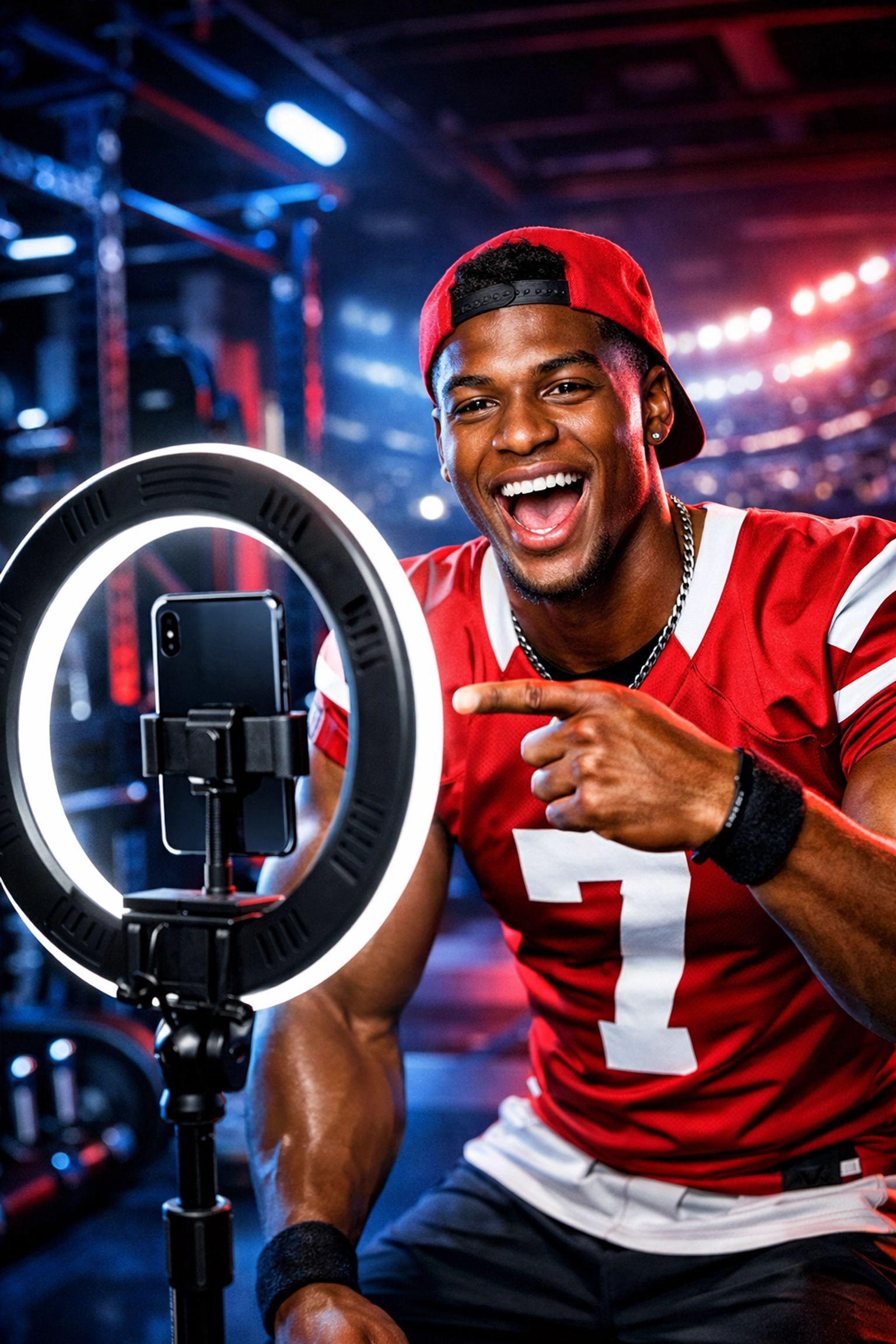
Alt text: College athlete creating short-form video content for a brand partnership, supporting Super Bowl marketing ROI through NIL activation.
Contact, sharing, and next steps
Contact:
Dan Kost, CEO
info@MySportsMedia.com
https://mysportsmedia.com/nil
Phone: (contact our receptionist for the direct line)
Share this post:
- Facebook: https://www.facebook.com/sharer/sharer.php?u=https://mysportsmedia.com/nil
- Instagram: https://www.instagram.com/ (share to Stories and tag @mysportsmedia)
- LinkedIn: https://www.linkedin.com/sharing/share-offsite/?url=https://mysportsmedia.com/nil
- X: https://twitter.com/intent/tweet?url=https://mysportsmedia.com/nil&text=The%20Ultimate%20Guide%20to%20the%20Super%20Bowl%20ROI%20Report%20%E2%80%93%20what%20CMOs%20need%20in%202026%20%23HighPerformance
Hashtag: #HighPerformance

