

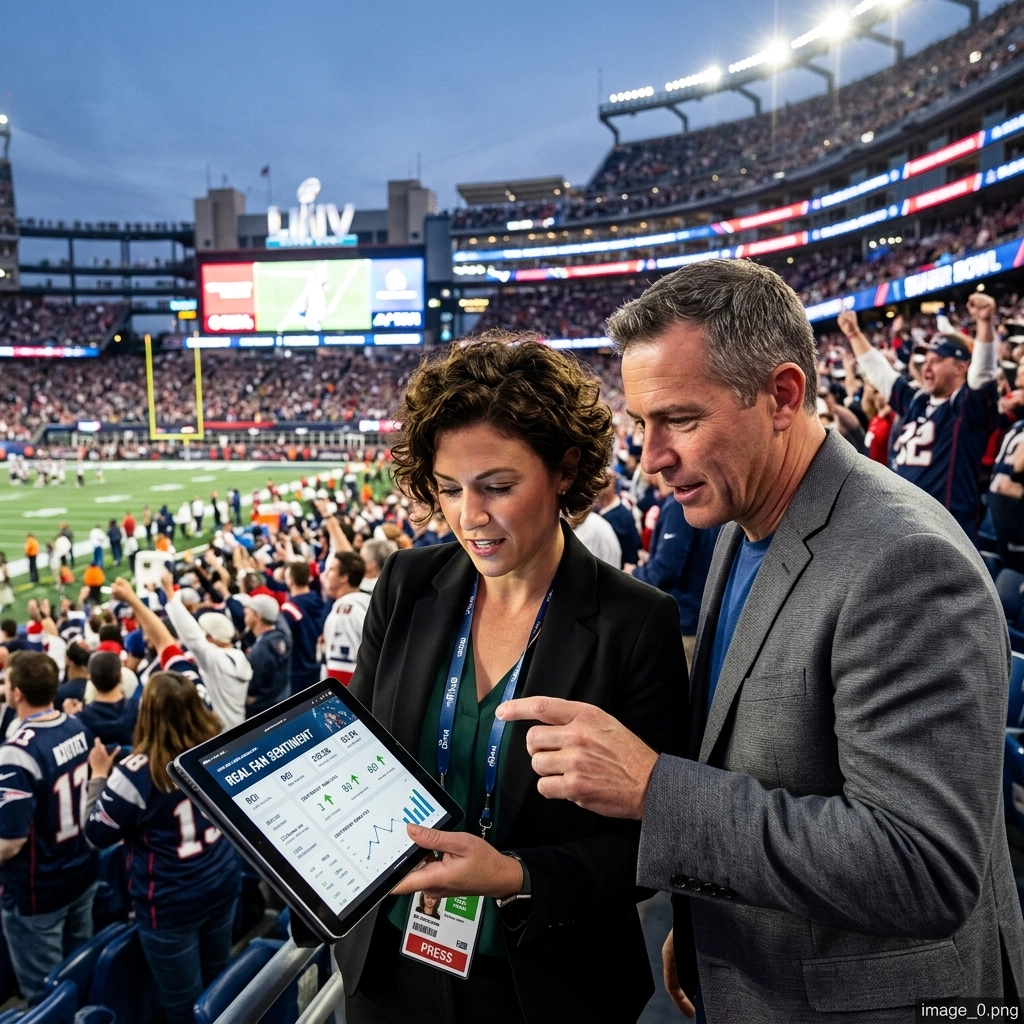
It is late April 2026, and the dust has finally settled on the biggest marketing event of the year. For most CMOs, the Super Bowl isn't just a game. It is a massive, multi million dollar gamble that keeps everyone up at night. We have spent the last few weeks digging through the data, looking at the sentiment velocity, and tracking the conversion lags to figure out who actually won.
I am Dan Kost, CEO of Name. Image, likeness. If you are reading this, you are probably looking for the real story behind those $7 to $8 million price tags for a 30 second spot. Is the juice really worth the squeeze? The answer is yes, but only if you know which levers to pull.
Welcome to the first batch of our Super Bowl Blitz Newsletter. We are going to break down the strategic insights that every CMO needs to understand about ROI and fan sentiment in 2026.
The Massive ROI Shift
First, let's talk about the big number. In 2020, the average return per dollar invested in a Super Bowl ad was around $2.70. Fast forward to today, and we are seeing that number jump to an average of $5.20. That is a massive improvement.
However, there is a catch. This is an average. While the "big winners" are seeing record breaking returns, the "big losers" are essentially throwing money into a black hole. The gap between a successful campaign and a flop has never been wider.

A photo-realistic image of a modern, high-tech corporate boardroom where executives are reviewing global marketing data on large, glowing transparent screens.
Why "Liking" Your Ad Isn't Enough
Here is a truth that might hurt: fan sentiment does not always equal revenue.
Every year, we see "Ad Meter" rankings that tell us which commercials were the most liked or the funniest. But as a CMO, you need to be careful. Research consistently shows that ad likeability often has no meaningful relationship with financial effectiveness.
Sure, 43 percent of viewers say these ads increase their interest in learning more about a brand. And about 34 percent say the commercials are their favorite part of the broadcast. But "interest" and "favorite" don't pay the bills. If your ad is funny but doesn't drive search intent or move the needle on branded search quality, it is just expensive entertainment.
The 72-Hour Operating Window
One of the biggest mistakes I see brands make is treating the Super Bowl as a single media buy. Successful brands in 2026 treat game day as a 72-hour operating window.
Your campaign actually has three distinct phases:
- Pre-Game Prime (Jan 15 – Feb 7): This is where the real work happens. Cost-per-click rates are 16 to 30 percent more efficient in the weeks leading up to the game compared to the week of the Super Bowl itself. If you aren't building awareness and retargeting audiences here, you are overpaying.
- Game Day Activation: This is about real-time agility. Fans are on their phones, reacting to plays, and sharing memes. You need to be in the conversation as it happens.
- Post-Game Momentum: The week after the game sees massive spikes in searches. This is where you capture the "Conversion Lag." This is when people who saw your ad finally decide to click "buy."
Check out this video for a deeper dive into how these strategies play out in real-time:
https://www.youtube.com/watch?v=l6J-0zileKE
What You Should Actually Be Measuring
If you want to know if your Super Bowl spend worked, stop looking at "likes" and start looking at these metrics:
- Branded Search Quality: Are people searching for your brand name plus terms like "pricing," "reviews," or "free trial"?
- Sentiment Velocity: How fast is the conversation moving? A slow trickle of positive comments is okay, but you want to see a rapid surge.
- Traffic-to-Action Rate: Getting a million people to your site is great, but how many of them actually did something?
- Conversion Lag: Track the sales and pipeline created in the 14 days following the game.

A photo-realistic, close-up shot of a professional marketing analyst’s hands typing on a sleek laptop, with blurred data charts and graphs visible on the screen in the background.
The Role of NIL and Authentic Connection
In 2026, we are seeing a massive shift toward authenticity. The most successful campaigns this year used athletes and influencers in ways that felt real, not scripted. This is where Name, Image, and Likeness (NIL) comes into play.
Athletes are no longer just faces on a poster. They are media entities themselves. By leveraging NIL, brands can tap into established communities and create a level of trust that a standard celebrity endorsement just can't match.
If you aren't thinking about how to integrate NIL into your broader digital marketing strategy, you are missing out on a huge piece of the ROI puzzle. You can learn more about how we handle this at mysportsmedia.com/nil.
Creative Truths for 2026
What worked creatively this year? It wasn't the over-produced, high-gloss spots. It was authenticity and humor.
We saw a lot of:
- Nostalgia with a Twist: Bringing back old favorites but giving them a modern, self-aware edge.
- Human-Centric AI: Using AI to tell better human stories, rather than just showing off the technology.
- Emotional Storytelling: Rooting the brand in its origins to build long-term "mental availability."
Earned media value from Super Bowl campaigns reached a staggering $550 million on social media alone this year. With over 764 billion potential impressions, the brands that won were the ones that didn't just buy an ad, they started a conversation that lasted for weeks.

A photo-realistic image of a group of diverse sports fans in a modern living room, cheering and looking at their smartphones while a football game plays on a large TV in the background.
Wrapping It Up
The Super Bowl remains the ultimate stage, but the rules have changed. It is no longer about the 30 seconds on the screen. It is about the 72 hours of engagement, the strategic use of NIL, and the ability to measure what actually matters to the bottom line.
If you are a CMO looking to maximize your ROI, don't get distracted by the vanity metrics. Focus on the data, stay agile, and remember that real sentiment is only valuable if it leads to real action.
Stay tuned for Batch 2 of our Super Bowl Blitz, where we will dive even deeper into the specific creative trends that dominated the 2026 season.
Dan Kost, CEO
Name. Image, likeness.
Digital Marketing Experts
mysportsmedia.com/nil
Email: info@MySportsMedia.com
Contact our office to speak with our team.
Share this post:
[Facebook] [Instagram] [LinkedIn] [X]
#HighPerformance

A photo-realistic image of a stadium at night, with the bright lights reflecting off the turf and a sense of quiet intensity after a major event.
About Name. Image, likeness.
We are a premier digital marketing agency specializing in athlete branding, NIL opportunities, and high-performance marketing strategies. Based in America/Denver, we help brands and athletes navigate the complex world of modern media to drive real results.

