

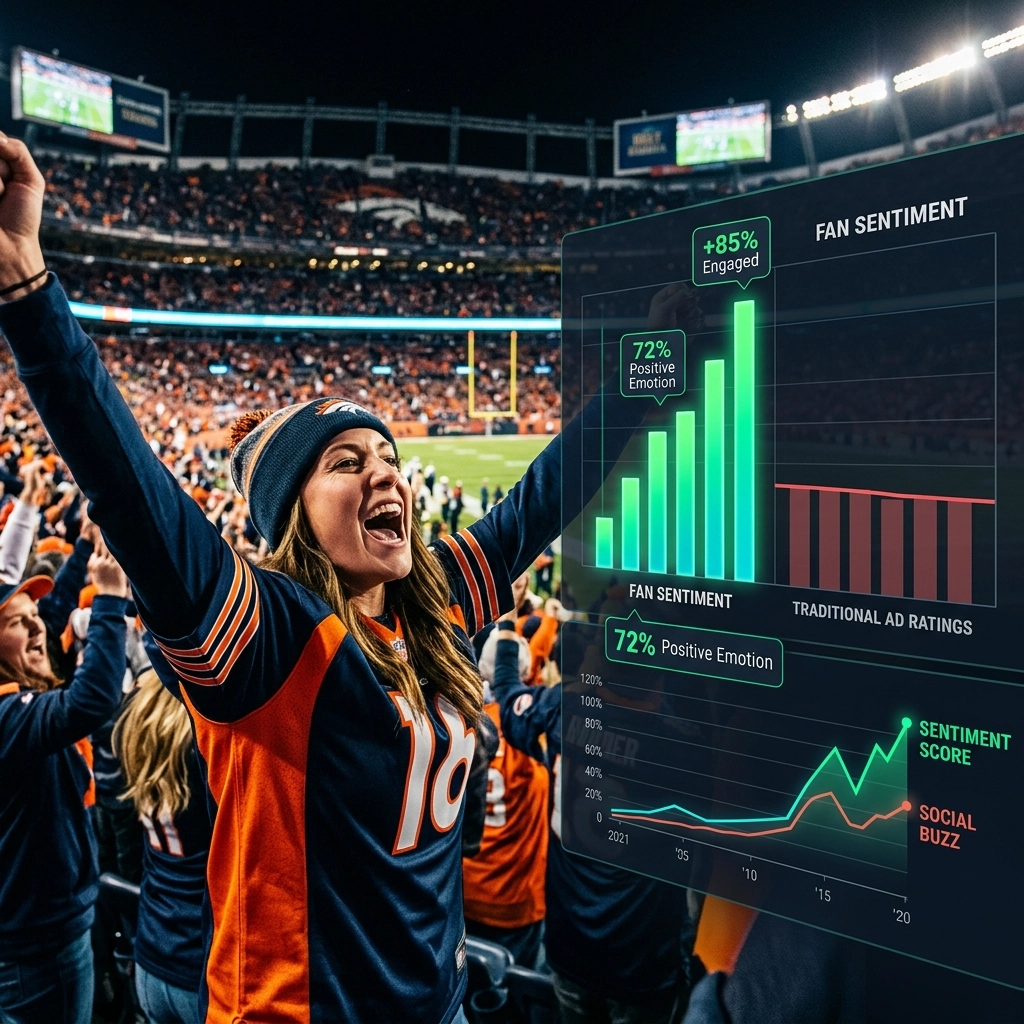
Every year, we see the same headlines after the big game. "123 Million People Tuned In." "Ad Slots Cost $7 Million for 30 Seconds." "Ratings are Up." But if you are a CMO or a brand stakeholder, you know that raw viewership numbers are only half the story. In fact, they might be the least important part of the story.
At Name. Image, likeness., we have been tracking the shift in how sports media impacts the bottom line. What we have found is that traditional ad ratings are a vanity metric. They tell you how many eyeballs were on the screen, but they do not tell you if those people actually care about your brand. If you want a real return on investment (ROI), you have to look at fan sentiment.
Why Traditional Metrics are Failing Modern Brands
For decades, the "gold standard" of Super Bowl success was the Nielsen rating. If the numbers were high, the ad was a success. However, in our modern digital landscape, a view is not a conversion. You can have 100 million people see your ad and still see zero movement in your brand equity if the sentiment is negative or, even worse, indifferent.
Passive consumption is dead. Today, success depends on active behavior. Are people talking about the ad? Are they sharing it? Are they creating their own content based on it? Recent data shows that sentiment-driven campaigns are delivering a massive compounding ROI. In 2020, brands saw an average return of $2.70 for every dollar spent. By 2026, that number has jumped to $5.20. That is nearly double the return, and it is not because more people are watching. It is because brands are getting better at capturing the hearts of the fans.
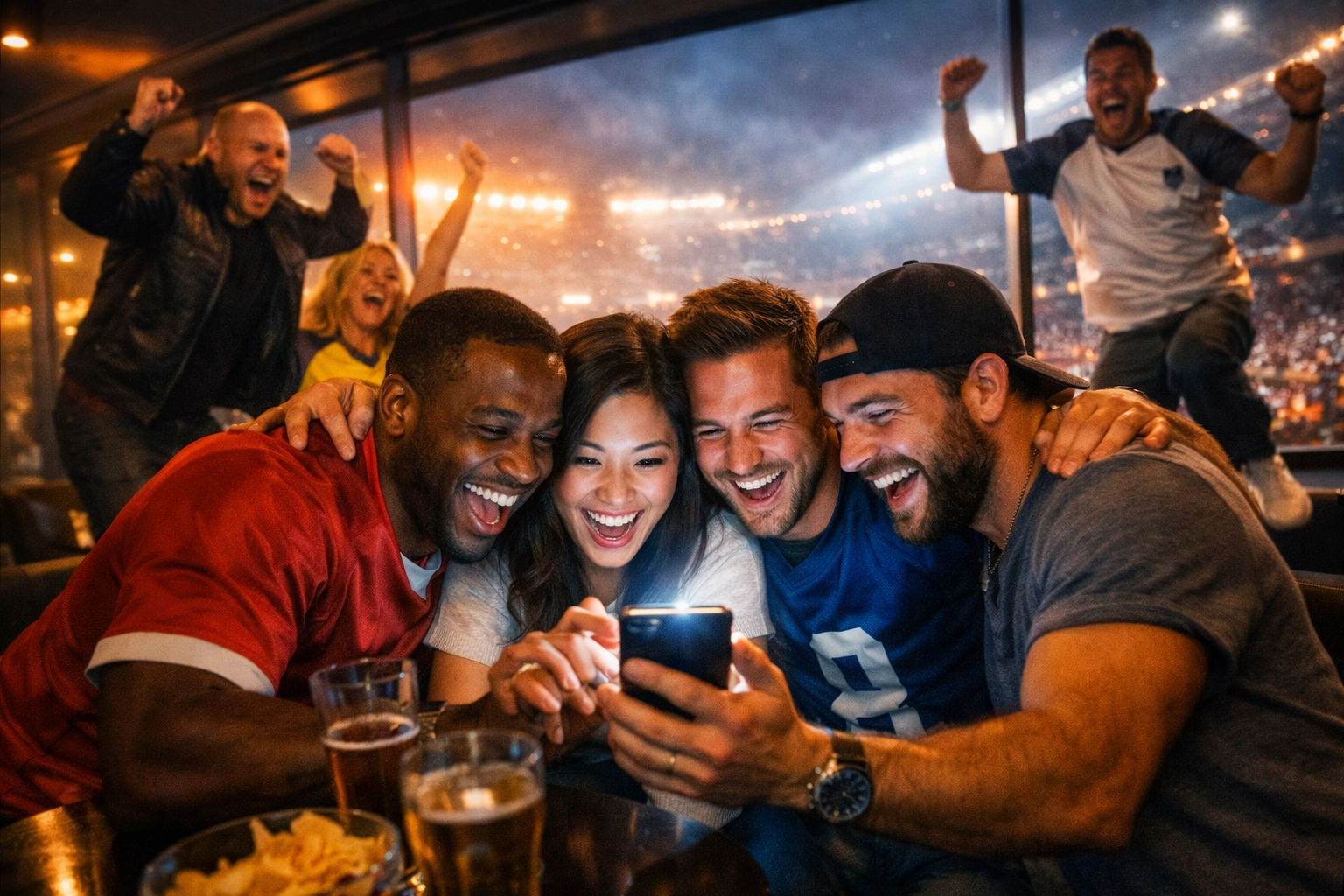
Alt text: A photo-realistic image of a diverse group of football fans cheering and using their smartphones to share content during a major sports event.
The Power of the 72-Hour Blitz
The biggest mistake a brand can make is thinking their job is done once the 30-second spot airs. The real work actually begins the moment the ad finishes. We call this the "Super Bowl Blitz" operating model. It is a critical 72-hour window where fan sentiment is forged and ROI is compounded.
If you are not active in the 72 hours following the game, you are leaving money on the table. Here is how the pros handle it:
The First 24 Hours: The Reaction Phase
This is when the internet is at its loudest. Within minutes of an ad airing, fans are already deciding if they love it or hate it. Successful brands have their teams ready to:
- Release cutdowns and creator edits immediately.
- Engage with fans on social media in real-time.
- Activate retargeting flows for everyone who engaged with the initial content.
Hours 24 to 72: The Amplification Phase
Once the initial dust settles, it is time to scale. This is where you move from broad awareness to targeted impact.
- Use audience segmentation to find the people who showed the most positive sentiment.
- Launch lookalike expansion campaigns to reach similar demographics.
- Test different messaging variations based on what resonated during the game.

Alt text: A professional marketing executive analyzing real-time data on a high-tech dashboard showing social media sentiment and engagement spikes.
Fan Sentiment: Emotional Connection Drives Dollars
Why does sentiment outperform ratings? Because emotion drives action. Research from Kantar shows that Super Bowl ads that score "Strong" for creative effectiveness drive significantly higher ROI than average ads. It is not just about being seen. It is about being felt.
One of the most effective ways to drive this emotional connection is through the use of familiar faces. Ads featuring celebrities or high-profile athletes lift brand equity 20% higher than those without them. But it is not just about the fame. It is about the trust and the "likeness" that those individuals bring to the table. This is where Name, Image, and Likeness (NIL) plays a massive role.
By partnering with athletes who already have a deep, emotional connection with their fan base, brands can skip the "introduction" phase and go straight to the "trust" phase. This is why we are seeing a 7% increase in nostalgia-driven messaging. People want to feel something familiar and positive.
Strategic Insights for CMOs
If you are looking to maximize your ROI during the next big sporting event, here are three things you should keep in mind:
- Prioritize Earned Media: Do not just buy the slot. Prepare for the social amplification. Earned media is the multiplier that turns a $7 million investment into a $35 million return.
- Leverage NIL Early: Do not wait until the Super Bowl to start your athlete partnerships. Use platforms like MySportsMedia.com/NIL to build those relationships now.
- Fast Creative Adaptation: The world moves fast. Your creative team needs to be able to pivot and create new assets based on real-time feedback during the game.
Watch: The Future of Sports Marketing ROI
Check out this deep dive into how fan sentiment is changing the game for advertisers.
https://www.youtube.com/watch?v=l6J-0zileKE
The Athlete Factor: Why NIL is the ROI Secret Weapon
When we talk about sentiment, we are really talking about human connection. Traditional ads can feel corporate and cold. But an athlete's personal brand is built on years of hard work, triumphs, and shared experiences with fans. When a brand aligns with an athlete through their Name, Image, and Likeness, they are inheriting that goodwill.
This is why we focus so heavily on the NIL marketplace. It is the most direct route to positive fan sentiment. Whether it is a local high school hero or a national superstar, the connection they have with their audience is something a 30-second script can't replicate.
Frequently Asked Questions (AEO)
How do you measure fan sentiment?
Fan sentiment is measured using social listening tools that analyze the tone of conversations around a brand. Unlike ratings, which measure volume, sentiment analysis looks at whether the mentions are positive, negative, or neutral.
Why is the 72-hour window after the Super Bowl so important?
The 72-hour window is when the "earned media" effect is at its peak. This is when content goes viral, memes are created, and the most significant brand lift occurs.
Does using celebrities actually increase Super Bowl ROI?
Yes, data shows that ads with celebrities can lift brand equity by up to 20% more than ads without them, as they provide an immediate emotional anchor for the audience.
What is the "Super Bowl Blitz" model?
The Super Bowl Blitz is a strategic operating model that focuses on rapid content creation, real-time engagement, and audience retargeting in the three days surrounding the game.
Final Thoughts
The game has changed. If you are still judging your marketing success by the number of people who saw your ad, you are playing an old game. The new winners are the brands that understand the power of fan sentiment and the critical importance of the 72-hour window.
At Name. Image, likeness., we are dedicated to helping brands navigate this new landscape through strategic NIL partnerships and high-performance digital marketing. Don't just buy an ad. Build a legacy.
#HighPerformance
Contact Information
Dan Kost, CEO
Email: info@MySportsMedia.com
Website: mysportsmedia.com/nil
Phone: Contact our main office for inquiries.
Follow Us & Share
Stay updated with the latest in sports media and NIL trends.
[Facebook] | [Instagram] | [LinkedIn] | [X (formerly Twitter)]

