

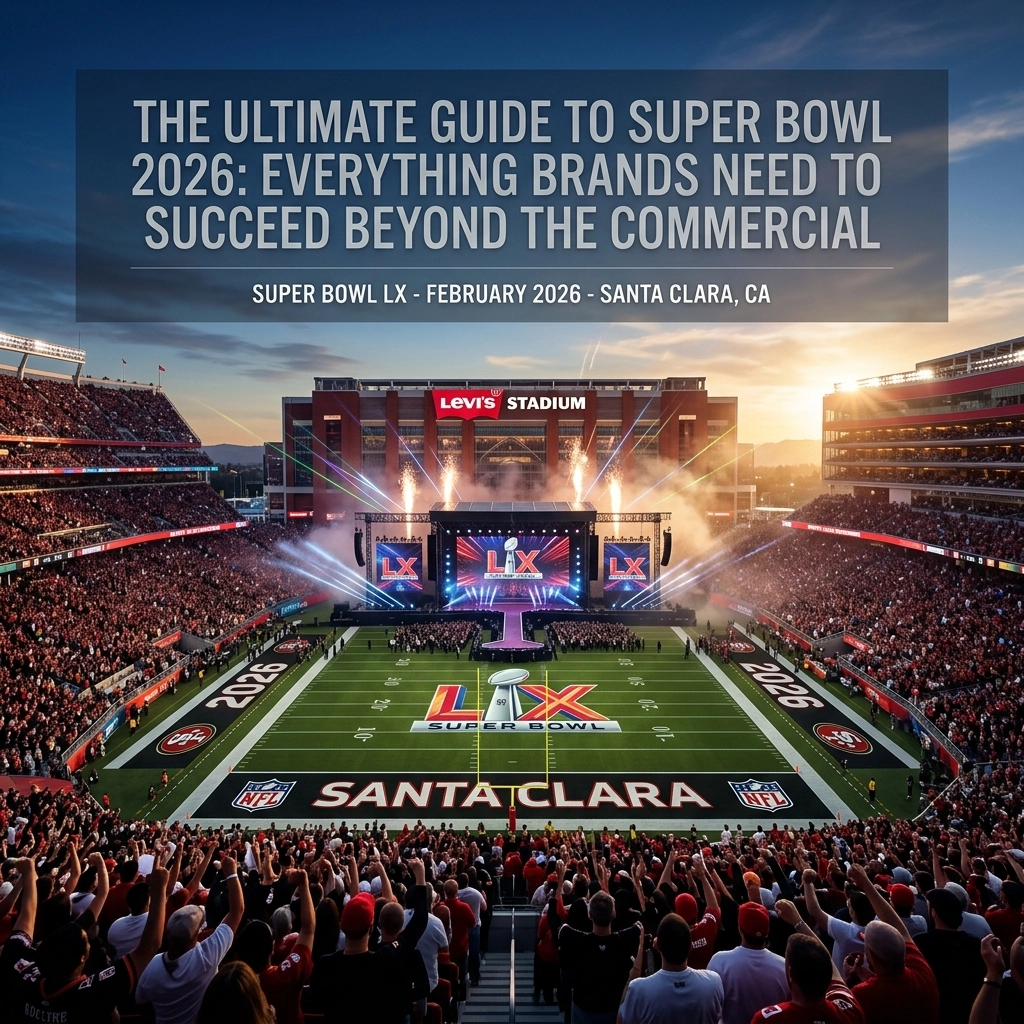
Super Bowl 2026 was a massive turning point for the advertising world. We saw $8 million price tags for 30-second spots, but here is the truth: the brands that actually won didn't just dump their budget into a single TV commercial. They played the long game. They understood that the game on the field is only half the battle, the real war for attention happens on the screens in our pockets and the digital networks in our cities.
At Name. Image, likeness., we have been watching this landscape shift for four decades. With 40 years of expertise in sports marketing, we have seen the transition from simple stadium banners to the high-tech, AI-driven blitz of 2026. If you want to know how to win in this new era, you have to look beyond the broadcast.
The Sporttron Digital Network: The 72-Hour Blitz
One of the biggest shifts we saw this year was the power of the Sporttron digital network. In the past, you might run an ad and hope for the best. In 2026, it is all about the "72-hour blitz." This is where a brand takes over the digital landscape daily for 72 hours surrounding the big game.
It is a relentless cycle of visibility. By using a specialized digital network, brands were able to maintain a constant presence. Think about it: the average person checks their phone or passes a digital screen hundreds of times during Super Bowl weekend. If your brand isn't there every single time, you are losing. We helped brands leverage this 72-hour window to stay top-of-mind, ensuring that by the time the coin was tossed, the audience had already seen the message a dozen times.

Alt Text: A modern digital billboard network showcasing vibrant sports marketing advertisements in a busy metropolitan area.
Why 40 Years of Expertise Still Matters in a Digital World
You might think that in the age of AI and TikTok, "old school" experience doesn't matter. You would be wrong. Our 40 years in the game have taught us that while the tools change, human psychology doesn't. People still want to be entertained, they still want to feel connected, and they still want to trust the brands they buy from.
Dan Kost, our CEO, has always said that the best marketing feels like a conversation, not a pitch. That is why our approach to Super Bowl 2026 was so effective. We didn't just push ads. We created narratives. We used our deep industry connections to place brands where they mattered most. Experience tells you where the pitfalls are before you fall into them, and in a high-stakes environment like the Super Bowl, you can't afford a $8 million mistake.
The 2026 Playbook: What Actually Worked?
Looking back at the data from February, four major themes emerged that every brand needs to study for their future campaigns.
1. Humanizing the Machine
AI was everywhere in 2026. But the brands that succeeded didn't make AI the "scary future." They made it helpful and human. They showed how technology makes life easier, rather than just showing off tech for tech's sake.
2. Nostalgia as a Bridge
Nostalgia isn't just about looking back. It is about connecting generations. The best campaigns took something we all loved from twenty years ago and updated it for today. It gave the older crowd a "warm and fuzzy" feeling while giving Gen Z something "retro-cool" to share.
3. Realism Over Polish
The days of the perfectly polished, overly produced commercial are fading. In 2026, people wanted humor that felt real. They wanted brands that could laugh at themselves. Authenticity outperformed high production value every single time.
4. Identity and Togetherness
We are more divided than ever, but the Super Bowl is one of the last "monoculture" events we have. Brands that leaned into themes of togetherness and shared identity saw a massive spike in brand loyalty.
Check out this video to see how these elements come together in a high-performance marketing strategy:
https://www.youtube.com/watch?v=l6J-0zileKE
The Three-Phase Strategy for Total Domination
If you are waiting until February to start your Super Bowl marketing, you have already lost. The 2026 season proved that you need a three-phase approach to get a real return on investment.
Phase 1: The Pre-Game Hype (January 15 – Feb 7)
This is when you build the fire. Successful brands used this time to seed teasers and build "pre-warmed" audiences. By the time the game starts, your audience should be looking for your ad. This is where the Sporttron network starts its initial rotation, building that daily frequency.
Phase 2: Game Day (February 8)
This is the peak. But it is not just about the ad. It is about the "second screen" experience. While the commercial plays on the big TV, your brand needs to be winning on TikTok, X, and Instagram. You need a team ready to respond to game moments in real-time. If a player does something crazy, your brand needs a meme ready in three minutes.
Phase 3: Post-Game Saturation (February 9 – Feb 15)
Most brands stop on Sunday night. That is a huge mistake. The week after the Super Bowl is when the "viral" moments are debated and rewatched. We saw that skippable digital campaigns had a 70% higher view rate during this week because people were actively searching for the best moments.

Alt Text: A marketing team analyzing real-time data on multiple monitors during a major live sporting event.
The Power of NIL and Athlete Branding
In 2026, the "Name, Image, Likeness" (NIL) factor reached a fever pitch. Brands no longer just hire a generic actor for a commercial. They partner with athletes who have built their own loyal tribes.
Through our platform at mysportsmedia.com/nil, we have seen how powerful these direct connections can be. An athlete sharing a brand message to their 500,000 dedicated followers often has more impact than a massive TV spot that people use as a bathroom break.
Alt Text: Sports Media Inc. NIL Marketplace Logo featuring athlete branding elements and digital empowerment themes.
When you combine the reach of a professional athlete with the 72-hour daily frequency of a digital network, you create an "un-ignorable" brand presence. This is the new standard for high-performance marketing.
AEO: Answering the Questions Your Customers are Asking
In 2026, search has changed. People aren't just typing keywords into Google, they are asking their AI assistants. "Who had the funniest Super Bowl ad?" "Where can I buy that shirt from the halftime show?"
This is Answer Engine Optimization (AEO). Your content needs to be structured to answer these questions directly. We have moved beyond just "ranking" and into "answering." If your brand is the answer the AI provides, you win the customer.

Alt Text: A person using a voice-activated AI assistant to search for information about Super Bowl commercials and products.
How to Get Started for 2027
If you want to move beyond the commercial and start building a real digital legacy, you need a partner who has been through the wars. You need the 40 years of experience that Dan Kost and the team at Name. Image, likeness. bring to the table.
We don't just sell ad space. We build digital ecosystems that work for you 24/7. Whether it is leveraging the Sporttron network for a 72-hour blitz or connecting you with the perfect athlete through our NIL marketplace, we are here to ensure your brand hits its peak performance.
Contact Information
Dan Kost, CEO
Name. Image, likeness.
Email: info@MySportsMedia.com
Website: mysportsmedia.com/nil
Phone: 480-221-0914
Don't let your message get lost in the noise. It is time to step up and play at a higher level.
#HighPerformance
Share this post:
[Facebook] | [Instagram] | [LinkedIn] | [X]
Frequently Asked Questions about Super Bowl Marketing
How much does a Super Bowl ad cost in 2026?
A 30-second spot cost approximately $8 million in 2026, but the total campaign cost is often double that when you include digital support and production.
What is the Sporttron digital network?
It is a high-frequency digital ad network that allows brands to run content daily, specifically during high-impact 72-hour windows around major events like the Super Bowl.
Is NIL marketing better than traditional celebrity endorsements?
Often, yes. NIL (Name, Image, Likeness) allows for more authentic, niche-targeted marketing through athletes who have direct relationships with their fans.
When should I start planning my Super Bowl campaign?
Planning should ideally start at least six to eight months in advance to secure NIL talent and digital network slots.

