

If you're a CMO considering a Super Bowl advertising investment, you're looking at a lot more than just a 30-second spot. You're looking at a $15-25 million commitment that could either catapult your brand into the stratosphere or become the most expensive learning experience of your career. Let's cut through the noise and talk about what actually drives Super Bowl ROI in 2026 and beyond.
The Real Numbers Behind Super Bowl Advertising
Here's the straight talk: a 30-second commercial during Super Bowl LX costs $8 million. That's $266,666 per second of airtime. And here's something interesting, those prices have plateaued for the first time in decades. No year-over-year increase. Why? Advertisers are getting smarter about demanding real ROI.
But that $8 million? That's just your ticket to the party. When you factor in production costs, creative development, and the multi-channel amplification strategy you absolutely need to make this work, you're looking at $15-25 million total.
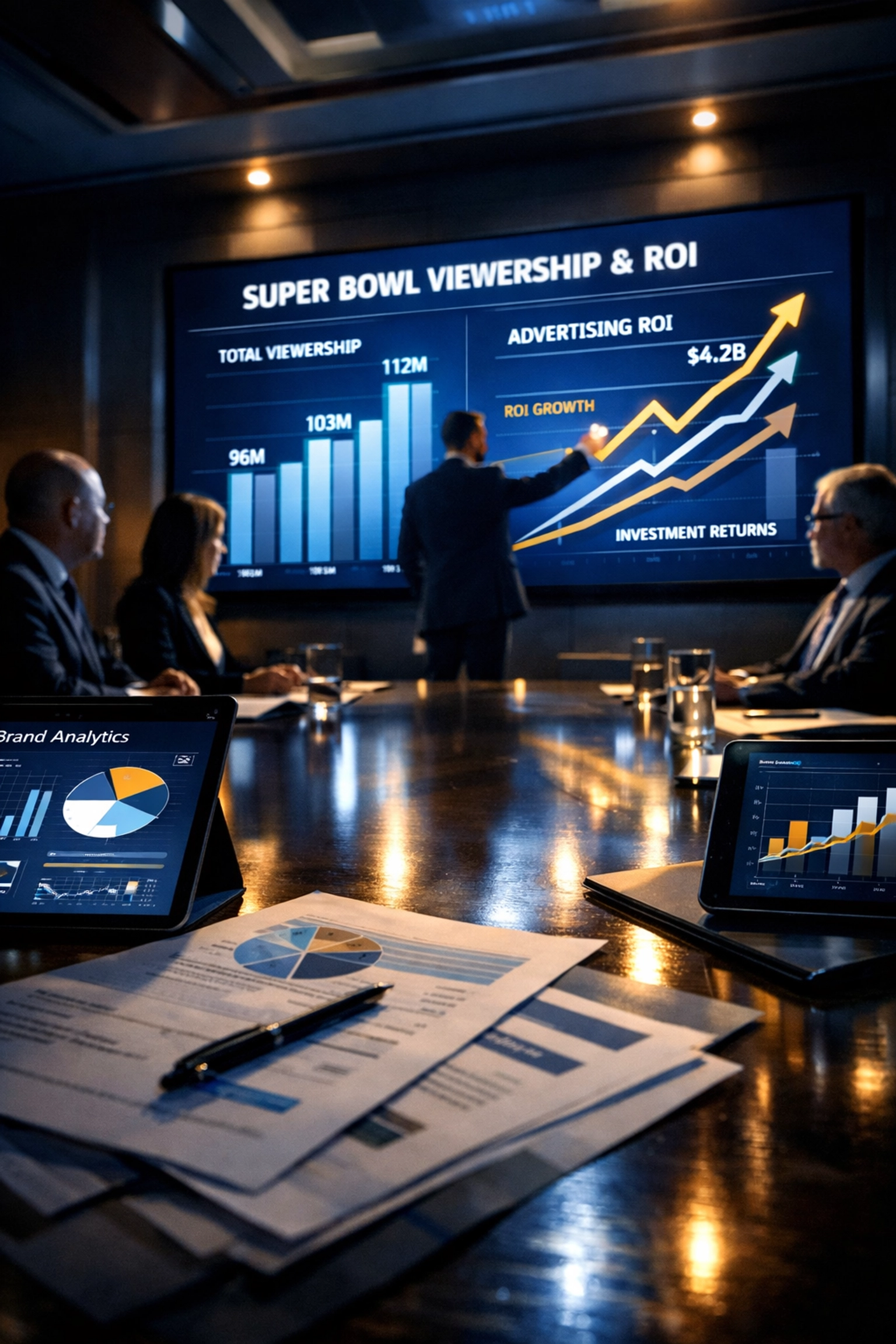
The good news? The game pulled 124.9 million viewers, with peak viewership hitting 137.8 million. That's roughly 25 times the audience of typical television programming. In our fragmented media landscape, that kind of consolidated attention is worth its weight in gold.
The ROI Debate: What the Data Really Shows
Here's where things get interesting. Industry analyses show conflicting perspectives, and understanding both sides is crucial for your decision-making.
On the optimistic side, recent data suggests average ROI improved to $5.20 in return for every $1 invested when you consider the full campaign cycle. That makes Super Bowl ads approximately 20 times more effective than regular television advertising on a per-dollar basis.
But hold on. Other analyses argue that Super Bowl ads rarely deliver positive ROI when you factor in those true all-in costs of $20-30 million. Digital alternatives, they say, typically outperform on efficiency metrics.
So who's right? Both. And that's exactly the point.
The Secret Sauce: Brand Salience Over Viral Fame
Here's what most brands get wrong: they chase viral moments instead of building lasting brand equity. Let me explain the difference.
Research analyzing 5,000 ads from 136 brands over five years found something critical. Brands using consistent, recognizable ideas and distinctive brand assets across channels generate significantly stronger business results than their inconsistent competitors.
Think about Old Spice. They didn't just create a viral Super Bowl moment and call it a day. They reinforced it through consistent repetition across every channel for months. The result? A 60% sales increase the following month and more than doubled year-over-year sales by July.
https://www.youtube.com/watch?v=l6J-0zileKE
Your Super Bowl Strategy Needs Three Phases, Not One
Stop thinking about the Super Bowl as a single event. Start thinking about it as a catalyst for an integrated campaign system:
Before the Game: Build anticipation. Create pre-campaign awareness. Get people talking before the whistle blows.
During the Game: Generate your cultural moment. Capture that viral attention. Make your mark when everyone's watching.
After the Game: This is where most brands drop the ball. Extend your messaging across social media and digital channels for weeks, not days. Reinforce those brand cues. Strengthen category associations. Keep the conversation alive.
The Metrics That Actually Matter
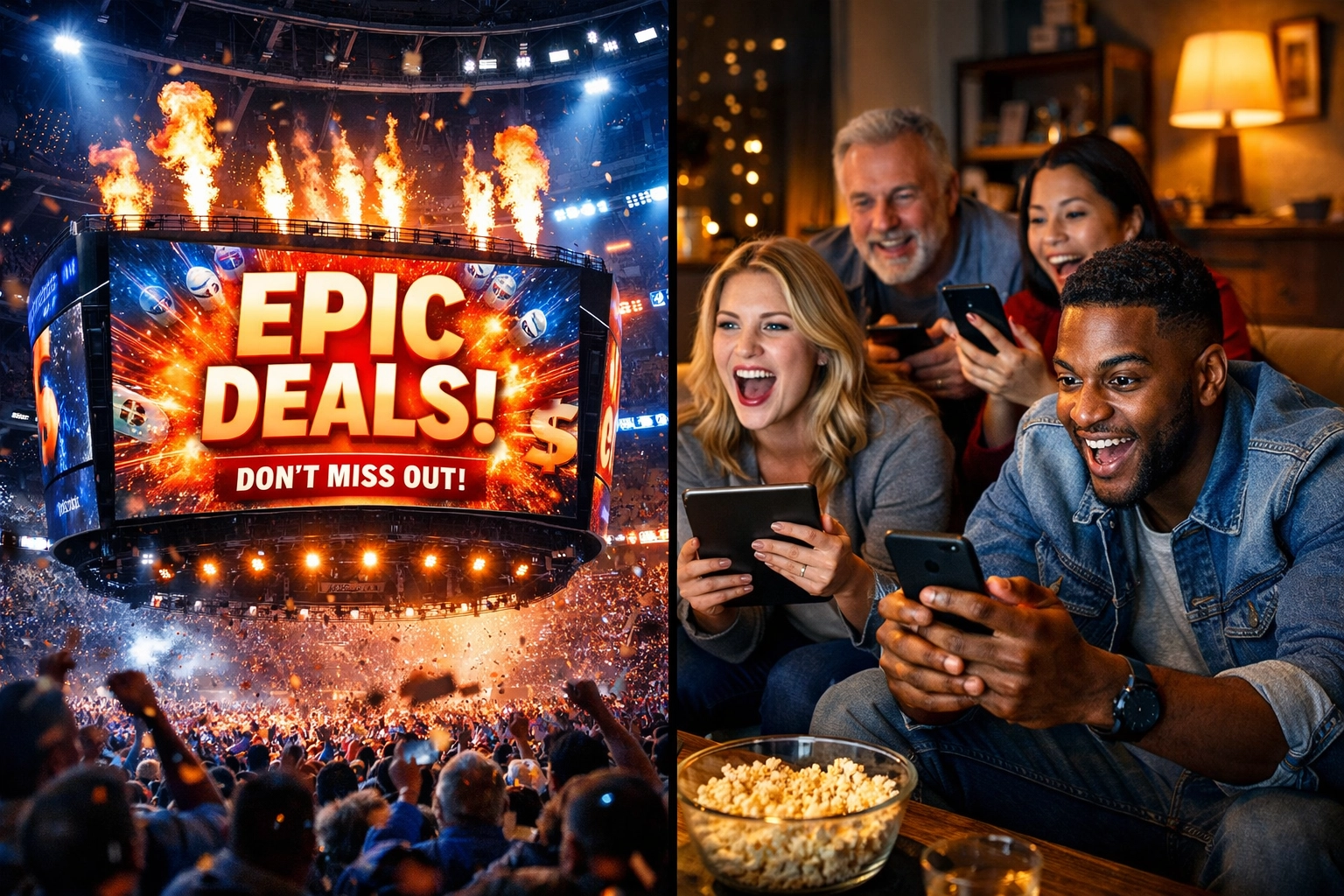
Forget about just tracking immediate social media buzz. Here's what you should be measuring:
Unaided Awareness: Can people recall your brand without prompting? This is gold.
Distinctive Asset Recognition: Can consumers identify your brand-specific visual or messaging elements? Think Nike's swoosh or McDonald's golden arches.
Earned Media Value: Super Bowl campaigns generated $550 million in earned media value on social media alone in 2026, with 764 billion potential impressions. But here's the catch, you need to know how to capture and extend that value.
Long-term Mental Availability: How well does your campaign strengthen your brand's position in consumer memory within its category? This is the metric that predicts future sales.
Sales Impact Over Time: Track downstream effects across website traffic, brand search volume, and revenue using advanced attribution modeling. Don't just look at the first week. Look at months 3, 6, and 12.
Strategic Positioning for 2026 and Beyond
The advertising cost landscape suggests stabilization rather than continued growth through 2030. Prices will likely stay in the $8-10 million range. This is actually good news for strategic CMOs.
Why? Because the competition shifts from who can pay the most to who can execute the best. Rather than competing primarily on creative novelty, successful strategies will focus on how the Super Bowl serves as a starting point for compound brand building.
The Bottom Line for CMOs
The Super Bowl delivers attention. That's not up for debate. The real question is whether your organization can execute a coordinated, multi-channel strategy that extends that attention into lasting brand equity and measurable business outcomes.
If you're treating this as a one-time media buy, save your money. If you're building an integrated campaign system with consistent brand assets and a clear amplification strategy, the Super Bowl might be your best investment of the year.
At Name. Image, likeness., we help brands and athletes maximize their presence across every channel. Whether you're considering a Super Bowl investment or building a comprehensive digital marketing strategy, we understand the landscape and can help you navigate it successfully.
Want to explore how NIL partnerships and strategic branding can amplify your marketing efforts? Check out our NIL program details or learn more about our approach at mysportsmedia.com/nil.
Ready to talk strategy? Contact Dan Kost, CEO at info@MySportsMedia.com or visit mysportsmedia.com/nil to learn how we can help you build campaigns that deliver real, measurable ROI.
Share this article with your marketing team and let's start a conversation about what drives real brand value in 2026. #HighPerformance
Connect with us:
- Facebook: Share your Super Bowl marketing wins
- Instagram: Follow us for daily marketing insights
- LinkedIn: Join the conversation on brand strategy
- X (Twitter): Real-time marketing commentary

