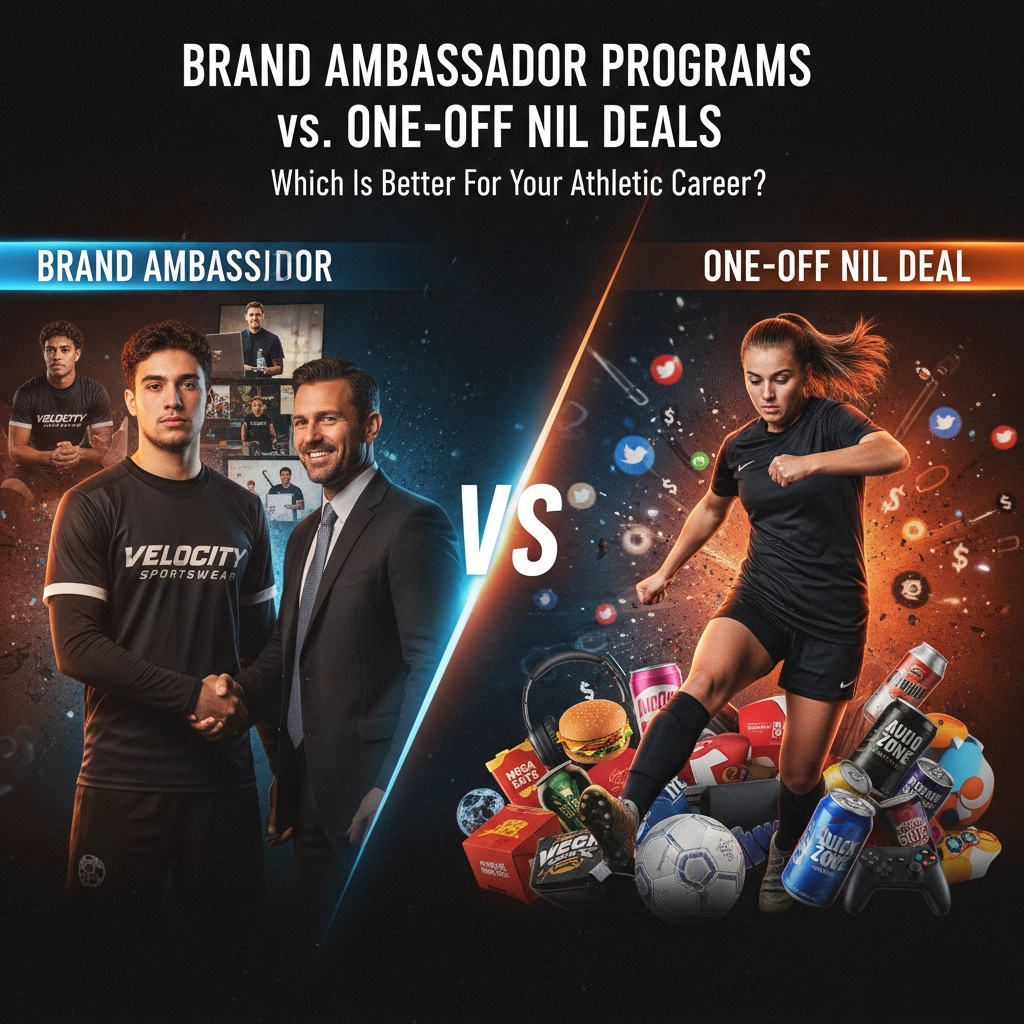
Student athletes today face an important choice when building their NIL portfolio. Should you commit to long-term brand ambassador programs or focus on one-time deals that offer immediate payouts?
Both approaches have distinct advantages. The right choice depends on your career goals, current brand strength, and long-term strategy.
Understanding Brand Ambassador Programs
Brand ambassador programs create ongoing partnerships between athletes and companies. These relationships typically last 6-12 months or longer. You represent the brand consistently across your social media platforms and in-person appearances.
The partnership goes beyond simple product promotion. Ambassadors often participate in brand strategy meetings, provide feedback on new products, and help shape marketing campaigns.

Most ambassador programs require exclusivity within specific product categories. If you're a basketball shoe ambassador, you cannot promote competing footwear brands during your contract period.
The financial structure usually includes a base monthly payment plus performance bonuses. Bonuses might be tied to social media engagement, sales generated, or specific campaign participation.
How One-Time NIL Deals Work
One-time deals are project-based partnerships. You create specific content or make appearances for a brand, then the relationship ends when the project is complete.
These deals offer maximum flexibility. You can work with multiple brands across different categories without long-term commitments. Payment is typically made upon completion of deliverables.
The content requirements are usually straightforward. Post specific images, create videos featuring the product, or attend a single event. Once you meet these requirements, the deal is finished.
Financial Comparison
Brand ambassador programs provide predictable income streams. Monthly payments help athletes budget and plan financially. The longer relationship often means higher total earnings over time.
One-time deals can generate quick cash flow. Athletes experiencing viral moments or peak performance can capitalize immediately with multiple high-paying deals.
However, one-time deals create income volatility. Your earnings depend on constantly securing new partnerships. This requires significant time investment in outreach and negotiation.

Ambassador programs typically include performance incentives. Meeting engagement targets or driving sales can substantially increase your earnings beyond the base payment.
Professional Development Benefits
Ambassador programs excel in skill building. You gain experience in marketing strategy, brand positioning, and business communications. These skills transfer directly to post-athletic careers.
Many programs include mentorship opportunities. Brand executives often provide guidance on personal branding, social media strategy, and career development.
The relationship depth allows for authentic partnerships. You have time to truly understand and believe in the products you promote. This authenticity resonates with audiences and builds trust.
One-time deals offer limited professional development. The transactional nature means minimal learning opportunities or relationship building.
Content Creation Differences
Ambassador relationships enable storytelling over time. You can showcase how products fit into your training routine, competition preparation, and daily life. This creates compelling, authentic content that audiences value.
The ongoing partnership allows for creative content development. You work with brand teams to develop unique campaigns and content series that showcase both your personality and the product.
One-time deals focus on immediate impact content. You create specific posts or videos according to brand guidelines. The content serves the immediate campaign goals but doesn't build long-term narratives.

Building Authentic Brand Relationships
Ambassador programs foster genuine connections between athletes and brands. You have time to learn about company values, products, and culture. This knowledge helps you represent the brand authentically.
The extended relationship allows brands to support your athletic goals beyond just marketing. Some companies provide training equipment, facility access, or competition support.
One-time deals rarely develop into meaningful relationships. The brief interaction limits opportunities for deeper brand connection or mutual support.
Impact on Audience Trust
Consistency in brand partnerships builds audience trust. When followers see you consistently using and endorsing specific products, your credibility increases.
Ambassador relationships allow you to share genuine experiences with products over time. You can discuss how products perform in different situations, building authentic testimonials.
Frequent one-time deals with different brands can appear opportunistic to audiences. Constantly changing endorsements may reduce your credibility and audience trust.
Career Stage Considerations
Early-career athletes often benefit more from ambassador programs. The steady income, professional development, and skill building provide valuable career foundation.
Established athletes with strong followings can effectively use one-time deals to maximize immediate earning potential during peak career periods.

Athletes nearing career transitions should consider ambassador programs that offer networking opportunities and business experience relevant to their post-athletic goals.
Strategic Portfolio Approach
The most successful athletes often combine both strategies. They maintain one or two core ambassador relationships while selectively pursuing complementary one-time deals.
This hybrid approach maximizes both immediate income and long-term development. Core partnerships provide stability while one-time deals capitalize on timely opportunities.
When using both strategies, ensure brand partnerships align with your personal values and don't create conflicts between sponsors.
Making Your Decision
Consider your current career stage and goals. If you need steady income and professional development, ambassador programs offer better value.
If you have strong market leverage and want maximum flexibility, one-time deals might be more appropriate.
Evaluate your time availability. Ambassador programs require consistent content creation and brand interaction. One-time deals need intensive short-term effort but minimal ongoing commitment.

Getting Started
Research brands that align with your values and sport. Companies seeking long-term partnerships often prioritize brand fit over follower count alone.
For ambassador opportunities, focus on brands you genuinely use and enjoy. Authentic enthusiasm translates into better content and stronger partnerships.
If you're interested in learning more about maximizing your NIL opportunities, explore our comprehensive resources at https://mysportsmedia.com/nil.
Final Recommendations
Brand ambassador programs typically provide better long-term value for most student athletes. The steady income, professional development, and authentic relationship building create advantages that extend beyond immediate financial gain.
However, the right choice depends on your specific situation. Consider your financial needs, career goals, time availability, and current brand strength when making this decision.
Sorry, but there's no universal right answer. Both strategies can be successful when executed properly and aligned with your individual circumstances.
The key is making an informed decision that supports both your immediate needs and long-term career objectives.