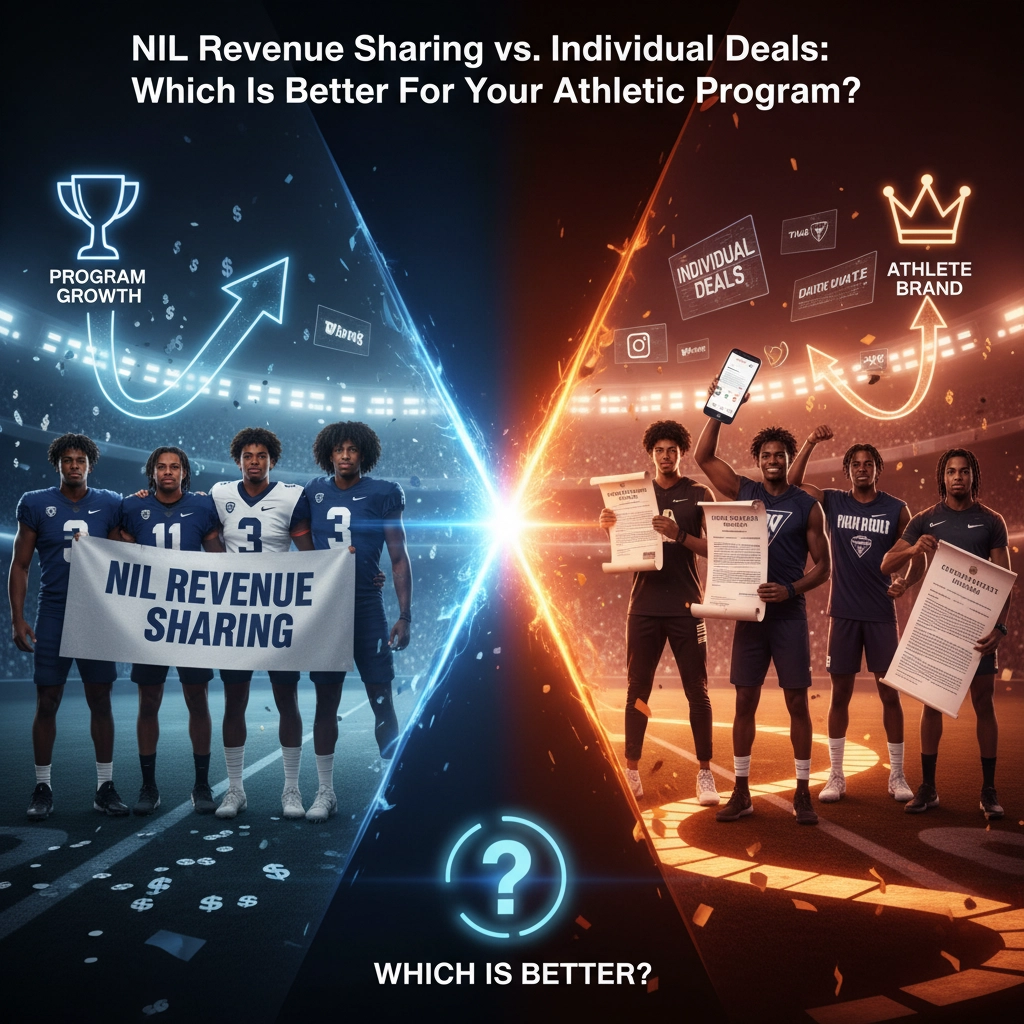
The college sports world just got a major shakeup. Between revenue sharing and individual NIL deals, athletic programs now have more ways than ever to compensate athletes. But here's the million-dollar question (literally): which approach works better for your program?
If you're scratching your head trying to figure out the best strategy, you're not alone. Every athletic director, coach, and program administrator is wrestling with the same decision. Let's break down both options so you can make the smartest choice for your team.
Revenue Sharing: The New Sheriff in Town
Think of revenue sharing as your program's direct line to athlete compensation. Schools can now distribute up to $20.5 million annually straight from their athletic department coffers. That number isn't static either – it's expected to grow about 4% each year, keeping pace with the expanding college sports economy.
Here's how most programs are dividing the pie: football typically grabs 70-75% of the share (no surprise there), followed by men's and women's basketball. The remaining funds get spread across other sports based on revenue generation and strategic priorities.

The Revenue Sharing Advantage
The biggest win with revenue sharing? Control. Your program calls the shots on who gets what and when. No more hoping a booster collective comes through with promised funds or worrying about whether a sponsor will honor their commitment to your star quarterback.
You also get predictability that makes budgeting actually possible. Instead of crossing your fingers and hoping for the best with unpredictable NIL deals, you know exactly how much you have to work with each year. That stability is gold when you're trying to build long-term recruiting strategies.
Plus, the compliance headaches are way more manageable. The College Sports Commission and NIL Go clearinghouse provide oversight that keeps everything above board. No more late-night panic attacks wondering if that athlete's Instagram post violated some obscure NCAA rule.
The Revenue Sharing Reality Check
But let's be real – $20.5 million sounds like a lot until you start dividing it across your entire athletic program. Even with football taking the lion's share, you're looking at tough decisions about how to distribute funds fairly across dozens of athletes and multiple sports.
Don't forget about Title IX either. Every dollar you spend on men's sports needs to be balanced with equitable spending on women's programs. That means your distribution strategy needs to be mathematically sound, not just athletically strategic.
Individual NIL Deals: The Wild West Approach
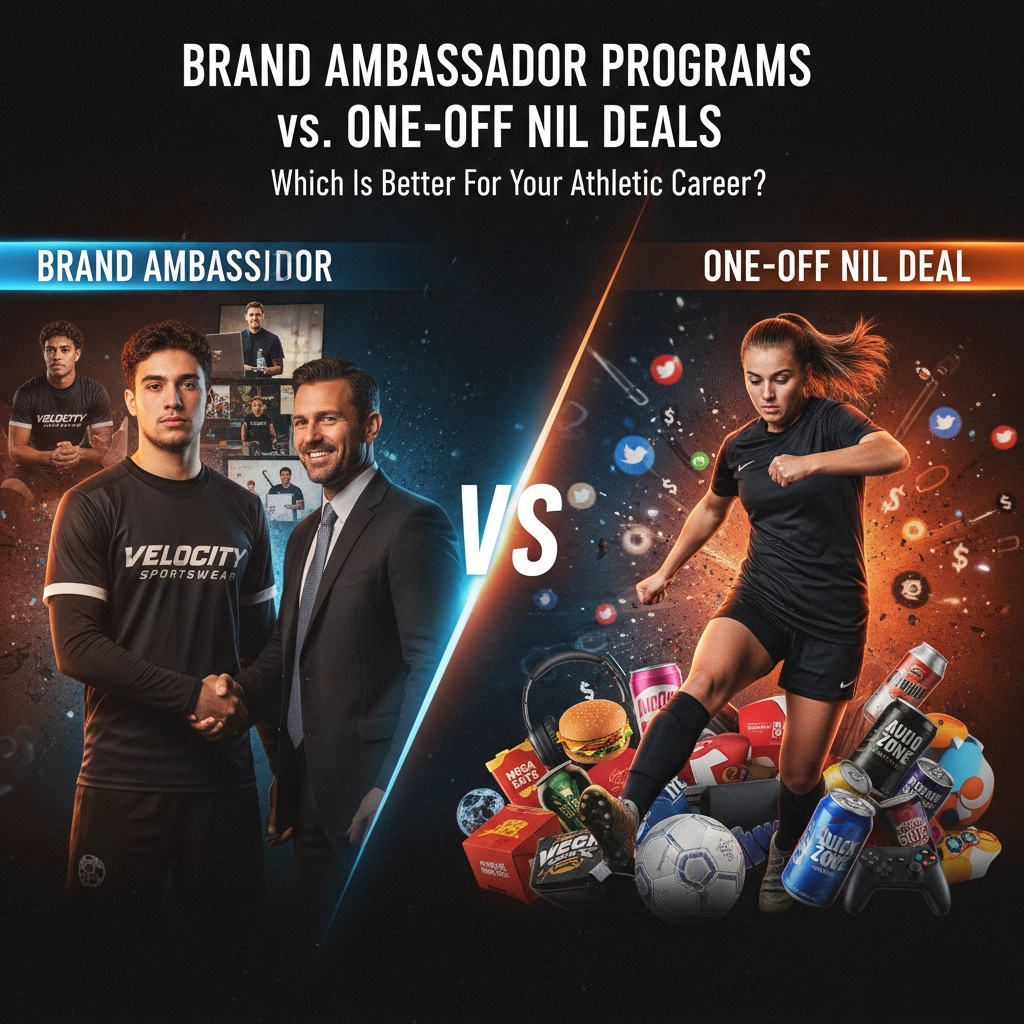
Individual NIL deals are where things get interesting. We're talking about third-party relationships – endorsements, social media partnerships, autograph signings, and appearance fees. Basically, if a brand wants to pay your athlete to promote their energy drink or car dealership, that's an individual NIL deal.

Why Individual Deals Still Matter
The beauty of individual NIL deals? They don't cost your program a dime. External sponsors, local businesses, and national brands foot the bill while your athletes cash in on their personal marketability.
For your superstar athletes, individual deals can blow revenue sharing out of the water. A top-tier quarterback or basketball player can potentially earn six or seven figures through the right partnerships. Try matching that with your revenue sharing budget.
These deals also bring marketing benefits your program didn't pay for. When your star player appears in a national commercial, that's free advertising for your school and athletic program.
The Individual Deal Downsides
Here's where things get tricky. Individual NIL earnings are about as predictable as the weather. Your backup punter probably isn't landing any major endorsement deals, while your starting quarterback might have brands lining up around the block.
You also lose control over the message. When an athlete partners with a brand, you're trusting them to represent your program well in every social media post, interview, and public appearance. That can go sideways fast if they make poor choices.
Compliance is another nightmare. Each deal needs review to ensure it doesn't violate recruiting rules or create unfair competitive advantages. Without proper oversight, individual deals can land your program in hot water with the NCAA.
The Head-to-Head Breakdown
Let's get tactical about how these options stack up:
Financial Impact: Revenue sharing hits your budget directly, while individual deals are funded externally. If money's tight, individual deals obviously win here.
Athlete Satisfaction: Revenue sharing provides guaranteed income security, but individual deals offer unlimited upside potential. Your stars will probably prefer individual opportunities, while your bench players will appreciate the revenue sharing safety net.
Recruiting Power: Revenue sharing gives you concrete numbers to promise recruits, while individual deals require you to sell potential rather than guarantees.
Program Control: Revenue sharing keeps everything in-house, while individual deals involve external parties with their own agendas.

What Smart Programs Are Actually Doing
The most successful programs aren't choosing one or the other – they're playing both sides strategically. Here's how to make this work:
Use Revenue Sharing as Your Foundation
Think of revenue sharing as your base salary offer. It provides stability and demonstrates your program's commitment to athlete welfare. Use these funds to ensure every athlete on your roster receives meaningful compensation, not just the superstars.
Layer Individual Deals on Top
Once you've established your revenue sharing foundation, encourage and facilitate high-value individual NIL opportunities. Help connect your athletes with potential sponsors, provide media training, and offer compliance guidance.
Match Your Strategy to Your Resources
If you're a major program with deep pockets, maximize your revenue sharing to create competitive advantages in recruiting and retention. If you're working with limited budgets, focus more heavily on facilitating individual opportunities while using revenue sharing selectively for key positions.
The Bottom Line for Your Program
Here's the truth: there's no one-size-fits-all answer. Your ideal approach depends on your program's financial situation, competitive goals, and athlete roster.
Programs prioritizing stability and control should lean heavily into revenue sharing. You'll get predictable outcomes and maintain institutional oversight over athlete compensation.
Programs facing budget constraints should focus on facilitating high-value individual NIL opportunities while using revenue sharing strategically for critical positions and sports.
The most competitive approach? Combine both strategically. Use revenue sharing to provide baseline security while encouraging individual deals to maximize earning potential for marketable athletes.
The college sports landscape is evolving rapidly, and the programs that adapt quickly will have significant advantages in recruiting and retention. Whether you choose revenue sharing, individual deals, or a hybrid approach, the key is making an informed decision that aligns with your program's unique circumstances and goals.
Ready to develop your NIL strategy? Check out our comprehensive resources at https://mysportsmedia.com/nil to get started.
The future of college sports is here, and it's time to make your move.